AI Writing Tools

Explore the best AI Writing Tools — independent reviews, comparisons, pricing and step-by-step how-to guides, curated by Aizhi.

  • Discovery system (artificial intelligence)

    Discovery system (artificial intelligence)

    A discovery system is an artificial intelligence system that attempts to discover new scientific concepts or laws. The aim of discovery systems is to automate scientific data analysis and the scientific discovery process. Ideally, an artificial intelligence system should be able to search systematically through the space of all possible hypotheses and yield the hypothesis - or set of equally likely hypotheses - that best describes the complex patterns in data. During the era known as the second AI summer (approximately 1978–1987), various systems akin to the era's dominant expert systems were developed to tackle the problem of extracting scientific hypotheses from data, with or without interacting with a human scientist. These systems included Autoclass, Automated Mathematician, Eurisko, which aimed at general-purpose hypothesis discovery, and more specific systems such as Dalton, which uncovers molecular properties from data. The dream of building systems that discover scientific hypotheses was pushed to the background with the second AI winter and the subsequent resurgence of subsymbolic methods such as neural networks. Subsymbolic methods emphasize prediction over explanation, and yield models which works well but are difficult or impossible to explain which has earned them the name black box AI. A black-box model cannot be considered a scientific hypothesis, and this development has even led some researchers to suggest that the traditional aim of science - to uncover hypotheses and theories about the structure of reality - is obsolete. Other researchers disagree and argue that subsymbolic methods are useful in many cases, just not for generating scientific theories. == Discovery systems from the 1970s and 1980s == Autoclass was a Bayesian Classification System written in 1986 Automated Mathematician was one of the earliest successful discovery systems. It was written in 1977 and worked by generating a modifying small Lisp programs Eurisko was a Sequel to Automated Mathematician written in 1984 Dalton is a still maintained program capable of calculating various molecular properties initially launched in 1983 and available in open source since 2017 Glauber is a scientific discovery method written in the context of computational philosophy of science launched in 1983 == Modern discovery systems (2009–present) == After a couple of decades with little interest in discovery systems, the interest in using AI to uncover natural laws and scientific explanations was renewed by the work of Michael Schmidt, then a PhD student in Computational Biology at Cornell University. Schmidt and his advisor, Hod Lipson, invented Eureqa, which they described as a symbolic regression approach to "distilling free-form natural laws from experimental data". This work effectively demonstrated that symbolic regression was a promising way forward for AI-driven scientific discovery. Since 2009, symbolic regression has matured further, and today, various commercial and open source systems are actively used in scientific research. Notable examples include Eureqa, now a part of DataRobot AI Cloud Platform, AI Feynman, and QLattice.

    Read more →
  • Shadow and highlight enhancement

    Shadow and highlight enhancement

    Shadow and highlight enhancement refers to an image processing technique used to correct exposure. The use of this technique has been gaining popularity, making its way onto magazine covers, digital media, and photos. It is, however, considered by some to be akin to other destructive Photoshop filters, such as the Watercolor filter, or the Mosaic filter. == Shadow recovery == A conservative application of the shadow/highlight tool can be very useful in recovering shadows, though it tends to leave a telltale halo around the boundary between highlight and shadow if used incorrectly. A way to avoid this is to use the bracketing technique, although this usually requires a tripod. == Highlight recovery == Recovering highlights with this tool, however, has mixed results, especially when using it on images with skin in them, and often makes people look like they have been "sprayed with fake tan". == Shadow brightening - manual == One way to brighten shadows in image editing software such as GIMP or Adobe Photoshop is to duplicate the background layer, invert the copy and set the blend modes of that top layer to "Soft Light". You can also use an inverted black and white copy of the image as a mask on a brightening layer, such as Curves or Levels. == Shadow brightening - automatic == Several automatic computer image processing-based shadow recovery and dynamic range compression methods can yield a similar effect. Some of these methods include the retinex method and homomorphic range compression. The retinex method is based on work from 1963 by Edwin Land, the founder of Polaroid. Shadow enhancement can also be accomplished using adaptive image processing algorithms such as adaptive histogram equalization or contrast limiting adaptive histogram equalization (CLAHE).

    Read more →
  • Progressive Graphics File

    Progressive Graphics File

    PGF (Progressive Graphics File) is a wavelet-based bitmapped image format that employs lossless and lossy data compression. PGF was created to improve upon and replace the JPEG format. It was developed at the same time as JPEG 2000 but with a focus on speed over compression ratio. PGF can operate at higher compression ratios without taking more encoding/decoding time and without generating the characteristic "blocky and blurry" artifacts of the original DCT-based JPEG standard. It also allows more sophisticated progressive downloads. == Color models == PGF supports a wide variety of color models: Grayscale with 1, 8, 16, or 31 bits per pixel Indexed color with palette size of 256 RGB color image with 12, 16 (red: 5 bits, green: 6 bits, blue: 5 bits), 24, or 48 bits per pixel ARGB color image with 32 bits per pixel Lab color image with 24 or 48 bits per pixel CMYK color image with 32 or 64 bits per pixel == Technical discussion == PGF claims to achieve an improved compression quality over JPEG adding or improving features such as scalability. Its compression performance is similar to the original JPEG standard. Very low and very high compression rates (including lossless compression) are also supported in PGF. The ability of the design to handle a very large range of effective bit rates is one of the strengths of PGF. For example, to reduce the number of bits for a picture below a certain amount, the advisable thing to do with the first JPEG standard is to reduce the resolution of the input image before encoding it — something that is ordinarily not necessary for that purpose when using PGF because of its wavelet scalability properties. The PGF process chain contains the following four steps: Color space transform (in case of color images) Discrete Wavelet Transform Quantization (in case of lossy data compression) Hierarchical bit-plane run-length encoding === Color components transformation === Initially, images have to be transformed from the RGB color space to another color space, leading to three components that are handled separately. PGF uses a fully reversible modified YUV color transform. The transformation matrices are: [ Y r U r V r ] = [ 1 4 1 2 1 4 1 − 1 0 0 − 1 1 ] [ R G B ] ; [ R G B ] = [ 1 3 4 − 1 4 1 − 1 4 − 1 4 1 − 1 4 3 4 ] [ Y r U r V r ] {\displaystyle {\begin{bmatrix}Y_{r}\\U_{r}\\V_{r}\end{bmatrix}}={\begin{bmatrix}{\frac {1}{4}}&{\frac {1}{2}}&{\frac {1}{4}}\\1&-1&0\\0&-1&1\end{bmatrix}}{\begin{bmatrix}R\\G\\B\end{bmatrix}};\qquad \qquad {\begin{bmatrix}R\\G\\B\end{bmatrix}}={\begin{bmatrix}1&{\frac {3}{4}}&-{\frac {1}{4}}\\1&-{\frac {1}{4}}&-{\frac {1}{4}}\\1&-{\frac {1}{4}}&{\frac {3}{4}}\end{bmatrix}}{\begin{bmatrix}Y_{r}\\U_{r}\\V_{r}\end{bmatrix}}} The chrominance components can be, but do not necessarily have to be, down-scaled in resolution. === Wavelet transform === The color components are then wavelet transformed to an arbitrary depth. In contrast to JPEG 1992 which uses an 8x8 block-size discrete cosine transform, PGF uses one reversible wavelet transform: a rounded version of the biorthogonal CDF 5/3 wavelet transform. This wavelet filter bank is exactly the same as the reversible wavelet used in JPEG 2000. It uses only integer coefficients, so the output does not require rounding (quantization) and so it does not introduce any quantization noise. === Quantization === After the wavelet transform, the coefficients are scalar-quantized to reduce the amount of bits to represent them, at the expense of a loss of quality. The output is a set of integer numbers which have to be encoded bit-by-bit. The parameter that can be changed to set the final quality is the quantization step: the greater the step, the greater is the compression and the loss of quality. With a quantization step that equals 1, no quantization is performed (it is used in lossless compression). In contrast to JPEG 2000, PGF uses only powers of two, therefore the parameter value i represents a quantization step of 2i. Just using powers of two makes no need of integer multiplication and division operations. === Coding === The result of the previous process is a collection of sub-bands which represent several approximation scales. A sub-band is a set of coefficients — integer numbers which represent aspects of the image associated with a certain frequency range as well as a spatial area of the image. The quantized sub-bands are split further into blocks, rectangular regions in the wavelet domain. They are typically selected in a way that the coefficients within them across the sub-bands form approximately spatial blocks in the (reconstructed) image domain and collected in a fixed size macroblock. The encoder has to encode the bits of all quantized coefficients of a macroblock, starting with the most significant bits and progressing to less significant bits. In this encoding process, each bit-plane of the macroblock gets encoded in two so-called coding passes, first encoding bits of significant coefficients, then refinement bits of significant coefficients. Clearly, in lossless mode all bit-planes have to be encoded, and no bit-planes can be dropped. Only significant coefficients are compressed with an adaptive run-length/Rice (RLR) coder, because they contain long runs of zeros. The RLR coder with parameter k (logarithmic length of a run of zeros) is also known as the elementary Golomb code of order 2k. === Comparison with other file formats === JPEG 2000 is slightly more space-efficient in handling natural images. The PSNR for the same compression ratio is on average 3% better than the PSNR of PGF. It has a small advantage in compression ratio but longer encoding and decoding times. PNG (Portable Network Graphics) is more space-efficient in handling images with many pixels of the same color. There are several self-proclaimed advantages of PGF over the ordinary JPEG standard: Superior compression performance: The image quality (measured in PSNR) for the same compression ratio is on average 3% better than the PSNR of JPEG. At lower bit rates (e.g. less than 0.25 bits/pixel for gray-scale images), PGF has a much more significant advantage over certain modes of JPEG: artifacts are less visible and there is almost no blocking. The compression gains over JPEG are attributed to the use of DWT. Multiple resolution representation: PGF provides seamless compression of multiple image components, with each component carrying from 1 to 31 bits per component sample. With this feature there is no need for separately stored preview images (thumbnails). Progressive transmission by resolution accuracy, commonly referred to as progressive decoding: PGF provides efficient code-stream organizations which are progressive by resolution. This way, after a smaller part of the whole file has been received, it is possible to see a lower quality of the final picture, the quality can be improved monotonically getting more data from the source. Lossless and lossy compression: PGF provides both lossless and lossy compression in a single compression architecture. Both lossy and lossless compression are provided by the use of a reversible (integer) wavelet transform. Side channel spatial information: Transparency and alpha planes are fully supported ROI extraction: Since version 5, PGF supports extraction of regions of interest (ROI) without decoding the whole image. == Available software == The author published libPGF via a SourceForge, under the GNU Lesser General Public License version 2.0. Xeraina offers a free Windows console encoder and decoder, and PGF viewers based on WIC for 32bit and 64bit Windows platforms. Other WIC applications including File Explorer are able to display PGF images after installing this viewer. Digikam is a popular open-source image editing and cataloging software that uses libPGF for its thumbnails. It makes use of the progressive decoding feature of PGF images to store a single version of each thumbnail, which can then be decoded to different resolutions without loss, thus allowing users to dynamically change the size of the thumbnails without having to recalculate them again.

    Read more →
  • Colors!

    Colors!

    Colors! is a series of digital painting applications for handheld game consoles and mobile devices. Originally created as a homebrew application for Nintendo DS (as Colors!), which was since legitimately distributed on PlayStation Vita, iOS, and Android, the project eventually evolved into an officially licensed application for Nintendo 3DS (as Colors! 3D) and Nintendo Switch (as Colors Live). == History == === Colors! === Colors! was originally released in June 2007 as a simple homebrew painting application for the Nintendo DS. It was developed by Jens Andersson, a programmer and designer on sabbatical from the games industry who wanted to experiment with the potential of the new handheld platform. Shortly after, Rafał Piasek created an online gallery where users could upload paintings made with the program. Colors! quickly became one of the best-known homebrew applications on the Nintendo DS, and in September 2008, it was also released for the iPhone and iPod Touch. As of August 2010, it had been downloaded almost half a million times. It was voted the most popular homebrew application on the Nintendo DS by readers of the R4 for DS blog. Development of Colors! DS homebrew officially ended in December 2010 although the official gallery still accepted submissions from DS users until 2020 when Colors! Gallery was discontinued. === Colors! 3D === Colors! 3D is a successor to the application Colors! for the Nintendo 3DS. It was released as an officially licensed application for the Nintendo eShop in North America on April 5, 2012, and in the PAL region on April 19, 2012. It was later released in Japan on August 21, 2013, published by Arc System Works. Colors! 3D allows users to draw on five layers, each on their own stereoscopic 3D plane. Drawing is done on the bottom screen, while the top screen displays the painting in 3D. While drawing, players can use the various controls on the Nintendo 3DS to change layers, zoom and pan, and alter the pressure of their brush. Pressing the L button allows users to access a menu to change brush type, size, and opacity, modify the layers, use the camera to provide references, and more. When the user finishes their painting, they can export it to the SD card for viewing in the Nintendo 3DS Camera application. Users can also upload their finished creations to an online gallery, viewed on the 3DS or the official website. Gallery features include hashtags and the ability to follow artists and post comments. Each painting also features a replay feature that allows viewers to see how it was drawn. The application also features local multiplayer, allowing several people to work cooperatively on a painting. In April 2024, the developers of Colors! 3D collaborated with the Pretendo Network project to officially add support for the application, meaning Colors! 3D will continue to operate as normal when using Pretendo Network. ==== Reception ==== IGN gave the application a score of 9.0 and an Editor's Choice award, praising its simple interface and tutorials. Destructoid gave the app a 9.0, calling it "a simple and incredibly fun tool with an amazing community of artists proudly displaying their beautiful and funny 3D images." Nintendo Life gave the app a 9/10, stating, "Though lacking in any structured play, Colors! 3D’s robust free drawing system and unique ability to let anyone create their own three-dimensional artwork more than make up for this." === Colors Live === A Nintendo Switch successor called Colors Live (stylised as Colors L!ve) was released in 2020 after being funded via a Kickstarter campaign. This expanded upon the features of previous installments by adding new brushes, increasing the maximum number of layers to ten, and introducing blend modes. A new game mode called Colors Quest was also included. A pressure-sensitive pen called the Colors SonarPen was developed in collaboration with GreenBulb to facilitate drawing on the Nintendo Switch, and comes pre-bundled with physical copies of the game. ==== Colors Quest ==== This new mode acts as a story-driven adventure wherein players are given a daily drawing challenge with a specific theme and certain stipulations that must be fulfilled. Once the drawing is complete, players must anonymously score other players' submissions, these scores are then aggregated to produce a personal ranking that measures the improvement in the player's art skills over time.

    Read more →
  • Amira (software)

    Amira (software)

    Amira (ah-MEER-ah) is a software platform for visualization, processing, and analysis of 3D and 4D data. It is being actively developed by Thermo Fisher Scientific in collaboration with the Zuse Institute Berlin (ZIB), and commercially distributed by Thermo Fisher Scientific — together with its sister software Avizo. == Overview == Amira is an extendable software system for scientific visualization, data analysis, and presentation of 3D and 4D data. It is used by researchers and engineers in academia and industry. It is a tool for processing, analysis and visualization of data from various modalities; e.g. micro-CT, PET, Ultrasound. It is used in many fields, such as microscopy in biology and materials science, molecular biology, quantum physics, astrophysics, computational fluid dynamics (CFD), finite element modeling (FEM), non-destructive testing (NDT), and many more. One of the key features, besides data visualization, is Amira's set of tools for image segmentation and geometry reconstruction. This allows the user to mark (or segment) structures and regions of interest in 3D image volumes using automatic, semi-automatic, and manual tools. The segmentation can then be used for a variety of subsequent tasks, such as volumetric analysis, density analysis, shape analysis, or the generation of 3D computer models for visualization, numerical simulations, or rapid prototyping or 3D printing. Other key Amira features are multi-planar and volume visualization, image registration, filament tracing, cell separation and analysis, tetrahedral mesh generation, fiber-tracking from diffusion tensor imaging (DTI) data, skeletonization, spatial graph analysis, and stereoscopic rendering of 3D data over multiple displays and immersive virtual reality environments, including CAVEs. As a commercial product Amira requires the purchase of a license or an academic subscription. A time-limited, but full-featured evaluation version is available for download free of charge. == History == === 1993–1998: Research software === Amira's roots go back to 1993 and the Department for Scientific Visualization, headed by Hans-Christian Hege at the Zuse Institute Berlin (ZIB). The ZIB is a research institute for mathematics and informatics. The Scientific Visualization department's mission is to help solve computationally and scientifically challenging tasks in medicine, biology, engineering and materials science. For this purpose, it develops algorithms and software for 2D, 3D, and 4D data visualization and visually supported exploration and analysis. At that time, the young visualization group at the ZIB had experience with the extendable, data flow-oriented visualization environments apE, IRIS Explorer, and Advanced Visualization Studio (AVS), but was not satisfied with these products' interactivity, flexibility, and ease-of-use for non-computer scientists. Therefore, the development of a new software system was started in a research project within a medically oriented, multi-disciplinary collaborative research center. Based on experiences that Tobias Höllerer had gained in late 1993 with the new graphics library IRIS Inventor, it was decided to utilize that library. The development of the medical planning system was performed by Detlev Stalling, who later became the chief software architect of Amira. The new software was called "HyperPlan", highlighting its initial target application – a planning system for hyperthermia cancer treatment. The system was being developed on Silicon Graphics (SGI) computers, which at the time were the standard workstations used for high-end graphics computing. The software was based on libraries such as OpenGL (originally IRIS GL), Open Inventor (originally IRIS Inventor), and the graphical user interface libraries X11, Motif (software), and ViewKit. In 1998, X11/Motif/Viewkit were replaced by the Qt toolkit. The HyperPlan framework served as the base for more and more projects at the ZIB and was used by a growing number of researchers in collaborating institutions. The projects included applications in medical image computing, medical visualization, neurobiology, confocal microscopy, flow visualization, molecular analytics and computational astrophysics. === 1998–today: Commercially supported product === The growing number of users of the system started to exceed the capacities that ZIB could spare for software distribution and support, as ZIB's primary mission was algorithmic research. Therefore, the spin-off company Indeed – Visual Concepts GmbH was founded by Hans-Christian Hege, Detlev Stalling, and Malte Westerhoff. In Feb 1998 the HyperPlan software was given the new, application-neutral name "Amira". This name is not an acronym, but was chosen for being pronounceable in different languages and providing a suitable connotation, namely "to look at" or "to wonder at", from the Latin verb "admirare" (to admire), which reflects a basic situation in data visualization. A major re-design of the software was undertaken by Detlev Stalling and Malte Westerhoff in order to make it a commercially supportable product and to make it available on non-SGI computers as well. In March 1999, the first version of the commercial Amira was exhibited at the CeBIT tradeshow in Hannover, Germany on SGI IRIX and Hewlett-Packard UniX (HP-UX) booths. Versions for Linux and Microsoft Windows followed within the following twelve months. Later Mac OS X support was added. Indeed – Visual Concepts GmbH selected the Bordeaux, France and San Diego, United States based company TGS, Inc. as the worldwide distributor for Amira and completed five major releases (up to version 3.1) in the subsequent four years. In 2003 both Indeed – Visual Concepts GmbH, as well as TGS, Inc. were acquired by Massachusetts-based Mercury Computer Systems, Inc. (NASDAQ:MRCY) and became part of Mercury's newly formed life sciences business unit, later branded Visage Imaging. In 2009, Mercury Computer Systems, Inc. spun off Visage Imaging again and sold it to Melbourne, Australia based Promedicus Ltd (ASX:PME), a leading provider of radiology information systems and medical IT solutions. During this time, Amira continued to be developed in Berlin, Germany and in close collaboration with the ZIB, still headed by the original creators of Amira. TGS, located in Bordeaux, France was sold by Mercury Computer systems to a French investor and renamed to Visualization Sciences Group (VSG). VSG continued the work on a complementary product named Avizo, based on the same source code but customized for material sciences. In August 2012, FEI, to that date the largest OEM reseller of Amira, purchased VSG and the Amira business from Promedicus. This brought the two software sisters Amira and Avizo back into one hand. In August 2013, Visualization Sciences Group (VSG) became a business unit of FEI. In 2016 FEI has been bought by Thermo Fisher Scientific and became part of its Materials & Structural Analysis division in early 2017. Amira and Avizo are still being marketed as two different products; Amira for life sciences and Avizo for materials science, but the development efforts are now joined once again. In the meantime, the number of scientific articles using the Amira / Avizo software, is in the order of 10 thousands. == Amira options == === Microscopy option === Specific readers for microscopy data Image deconvolution Exploration of 3D imagery obtained from virtually any microscope Extraction and editing of filament networks from microscopy images === DICOM reader === Import of clinical and preclinical data in DICOM format === Mesh option === Generation of 3D finite element (FE) meshes from segmented image data Support for many state-of-the-art FE solver formats High-quality visualization of simulation mesh-based results, using scalar, vector, and tensor field display modules === Skeletonization option === Reconstruction and analysis of neural and vascular networks Visualization of skeletonized networks Length and diameter quantification of network segments Ordering of segments in a tree graph Skeletonization of very large image stacks === Molecular option === Advanced tools for the visualization of molecule models Hardware-accelerated volume rendering Powerful molecule editor Specific tools for complex molecular visualization === Developer option === Creation of new custom components for visualizing or data processing Implementation of new file readers or writers C++ programming language Development wizard for getting started quickly === Neuro option === Medical image analysis for DTI and brain perfusion Fiber tracking supporting several stream-line based algorithms Fiber separation into fiber bundles based on user defined source and destination regions Computation of tensor fields, diffusion weighted maps Eigenvalue decomposition of tensor fields Computation of mean transit time, cerebral blood flow, and cerebral blood volume === VR option === Visualization of data on large tiled displays

    Read more →
  • Feed forward (control)

    Feed forward (control)

    A feed forward (sometimes written feedforward) is an element or pathway within a control system that passes a controlling signal from a source in its external environment to a load elsewhere in its external environment. This is often a command signal from an external operator. In control engineering, a feedforward control system is a control system that uses sensors to detect disturbances affecting the system and then applies an additional input to minimize the effect of the disturbance. This requires a mathematical model of the system so that the effect of disturbances can be properly predicted. A control system which has only feed-forward behavior responds to its control signal in a pre-defined way without responding to the way the system reacts; it is in contrast with a system that also has feedback, which adjusts the input to take account of how it affects the system, and how the system itself may vary unpredictably. In a feed-forward system, the control variable adjustment is not error-based. Instead it is based on knowledge about the process in the form of a mathematical model of the process and knowledge about, or measurements of, the process disturbances. Some prerequisites are needed for control scheme to be reliable by pure feed-forward without feedback: the external command or controlling signal must be available, and the effect of the output of the system on the load should be known (that usually means that the load must be predictably unchanging with time). Sometimes pure feed-forward control without feedback is called 'ballistic', because once a control signal has been sent, it cannot be further adjusted; any corrective adjustment must be by way of a new control signal. In contrast, 'cruise control' adjusts the output in response to the load that it encounters, by a feedback mechanism. These systems could relate to control theory, physiology, or computing. == Overview == With feed-forward or feedforward control, the disturbances are measured and accounted for before they have time to affect the system. In the house example, a feed-forward system may measure the fact that the door is opened and automatically turn on the heater before the house can get too cold. The difficulty with feed-forward control is that the effects of the disturbances on the system must be accurately predicted, and there must not be any unmeasured disturbances. For instance, if a window was opened that was not being measured, the feed-forward-controlled thermostat might let the house cool down. The term has specific meaning within the field of CPU-based automatic control. The discipline of feedforward control as it relates to modern, CPU based automatic controls is widely discussed, but is seldom practiced due to the difficulty and expense of developing or providing for the mathematical model required to facilitate this type of control. Open-loop control and feedback control, often based on canned PID control algorithms, are much more widely used. There are three types of control systems: open-loop, feed-forward, and feedback. An example of a pure open-loop control system is manual non-power-assisted steering of a motor car; the steering system does not have access to an auxiliary power source and does not respond to varying resistance to turning of the direction wheels; the driver must make that response without help from the steering system. In comparison, power steering has access to a controlled auxiliary power source, which depends on the engine speed. When the steering wheel is turned, a valve is opened which allows fluid under pressure to turn the wheels. A sensor monitors that pressure so that the valve only opens enough to cause the correct pressure to reach the wheel turning mechanism. This is feed-forward control where the output of the system, the change in direction of travel of the vehicle, plays no part in the system. See Model predictive control. If the driver is included in the system, then they do provide a feedback path by observing the direction of travel and compensating for errors by turning the steering wheel. In that case you have a feedback system, and the block labeled System in Figure(c) is a feed-forward system. In other words, systems of different types can be nested, and the overall system regarded as a black-box. Feedforward control is distinctly different from open-loop control and teleoperator systems. Feedforward control requires a mathematical model of the plant (process and/or machine being controlled) and the plant's relationship to any inputs or feedback the system might receive. Neither open-loop control nor teleoperator systems require the sophistication of a mathematical model of the physical system or plant being controlled. Control based on operator input without integral processing and interpretation through a mathematical model of the system is a teleoperator system and is not considered feedforward control. == History == Historically, the use of the term feedforward is found in works by Harold S. Black in US patent 1686792 (invented 17 March 1923) and D. M. MacKay as early as 1956. While MacKay's work is in the field of biological control theory, he speaks only of feedforward systems. MacKay does not mention feedforward control or allude to the discipline of feedforward controls. MacKay and other early writers who use the term feedforward are generally writing about theories of how human or animal brains work. Black also has US patent 2102671 invented 2 August 1927 on the technique of feedback applied to electronic systems. The discipline of feedforward controls was largely developed by professors and graduate students at Georgia Tech, MIT, Stanford and Carnegie Mellon. Feedforward is not typically hyphenated in scholarly publications. Meckl and Seering of MIT and Book and Dickerson of Georgia Tech began the development of the concepts of Feedforward Control in the mid-1970s. The discipline of Feedforward Controls was well defined in many scholarly papers, articles and books by the late 1980s. == Benefits == The benefits of feedforward control are significant and can often justify the extra cost, time and effort required to implement the technology. Control accuracy can often be improved by as much as an order of magnitude if the mathematical model is of sufficient quality and implementation of the feedforward control law is well thought out. Energy consumption by the feedforward control system and its driver is typically substantially lower than with other controls. Stability is enhanced such that the controlled device can be built of lower cost, lighter weight, springier materials while still being highly accurate and able to operate at high speeds. Other benefits of feedforward control include reduced wear and tear on equipment, lower maintenance costs, higher reliability and a substantial reduction in hysteresis. Feedforward control is often combined with feedback control to optimize performance. == Model == The mathematical model of the plant (machine, process or organism) used by the feedforward control system may be created and input by a control engineer or it may be learned by the control system. Control systems capable of learning and/or adapting their mathematical model have become more practical as microprocessor speeds have increased. The discipline of modern feedforward control was itself made possible by the invention of microprocessors. Feedforward control requires integration of the mathematical model into the control algorithm such that it is used to determine the control actions based on what is known about the state of the system being controlled. In the case of control for a lightweight, flexible robotic arm, this could be as simple as compensating between when the robot arm is carrying a payload and when it is not. The target joint angles are adjusted to place the payload in the desired position based on knowing the deflections in the arm from the mathematical model's interpretation of the disturbance caused by the payload. Systems that plan actions and then pass the plan to a different system for execution do not satisfy the above definition of feedforward control. Unless the system includes a means to detect a disturbance or receive an input and process that input through the mathematical model to determine the required modification to the control action, it is not true feedforward control. === Open system === In control theory, an open system is a feed forward system that does not have any feedback loop to control its output. In contrast, a closed system uses on a feedback loop to control the operation of the system. In an open system, the output of the system is not fed back into the input to the system for control or operation. == Applications == === Physiological feed-forward system === In physiology, feed-forward control is exemplified by the normal anticipatory regulation of heartbeat in advance of actual physical exertion by the central autonomic network. Feed-forward

    Read more →
  • BeHafizh

    BeHafizh

    BeHafizh is a mobile application to assist in the effort to memorize Qur'anic verses. The software runs on the Android operating system. This application was made by a team from Gadjah Mada University (UGM) consisting of Farid Amin Ridwanto, Rian Adam Rajagede and Alfian Try Putranto in order to participate in the National Student Musabaqoh Tilawatil Quran (MTQ) held at University of Indonesia (UI) on 1- August 8, 2015. This application then won a gold medal in the branch of Computer Application Design in the competition. == Features == === Audio Player === Audio player, paragraph can be played repeatedly, with pause, and can be done on a certain range of Quranic verses. === Memorization Test === Memorization testing continues users to improve their memorization. Memorization Recorders improves user's ability to recite Quran. === Colour indicators === === Achievements === === Reminders ===

    Read more →
  • Google Tasks

    Google Tasks

    Google Tasks is a task management application developed by Google and included with Google Workspace. Included initially as a feature in Gmail and Google Calendar, Google Tasks launched as a core product with a standalone app in 2018. It is available for Android and iOS, as well as in the right-hand side panel on Google Workspace apps on the web and in Google Calendar. == History and development == Google Tasks began as an integration within other apps in G Suite (now Google Workspace), allowing to-do items to be created in Calendar and Gmail. Upon graduating to a core service on June 28, 2018, Google Tasks launched as a dedicated mobile app in which tasks can be sorted into lists, managed, and completed. Google Tasks launched the ability to create tasks from Google Chat messages in 2022.

    Read more →
  • Cognitive robotics

    Cognitive robotics

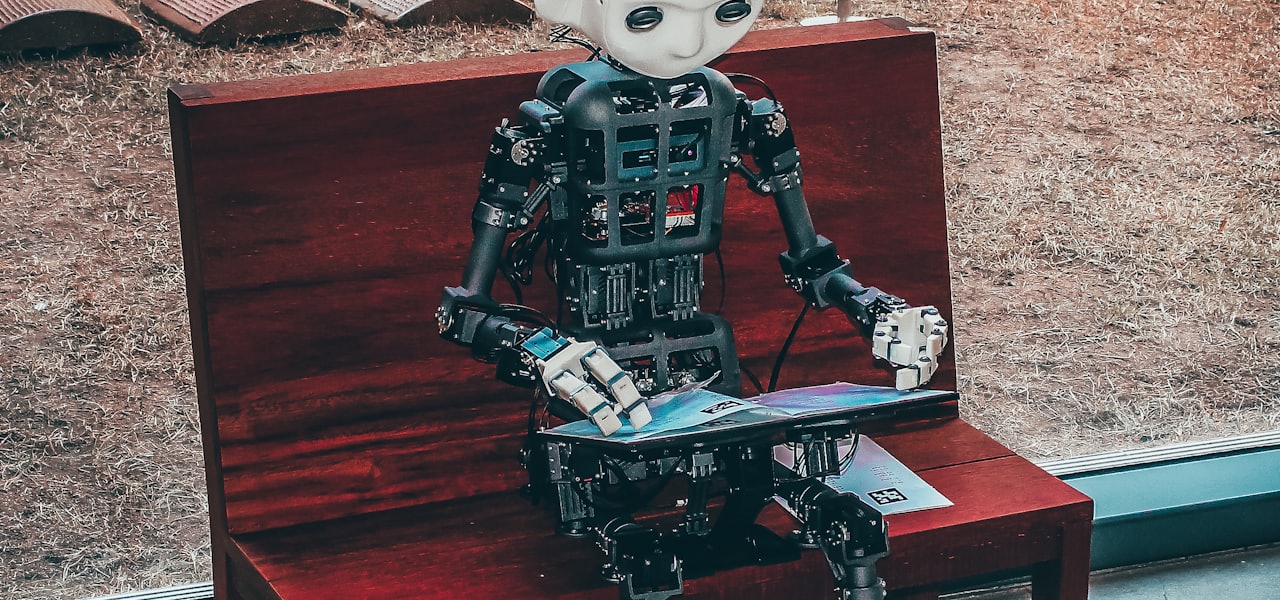
    Cognitive robotics or cognitive technology is a subfield of robotics concerned with endowing a robot with intelligent behavior by providing it with a processing architecture that will allow it to learn and reason about how to behave in response to complex goals in a complex world. Cognitive robotics may be considered the engineering branch of embodied cognitive science and embodied embedded cognition, consisting of robotic process automation, artificial intelligence, machine learning, deep learning, optical character recognition, image processing, process mining, analytics, software development and system integration. == Core issues == While traditional cognitive modeling approaches have assumed symbolic coding schemes as a means for depicting the world, translating the world into these kinds of symbolic representations has proven to be problematic if not untenable. Perception and action and the notion of symbolic representation are therefore core issues to be addressed in cognitive robotics. == Starting point == Cognitive robotics views human or animal cognition as a starting point for the development of robotic information processing, as opposed to more traditional artificial intelligence techniques. Target robotic cognitive capabilities include perception processing, attention allocation, anticipation, planning, complex motor coordination, reasoning about other agents and perhaps even about their own mental states. Robotic cognition embodies the behavior of intelligent agents in the physical world (or a virtual world, in the case of simulated cognitive robotics). Ultimately, the robot must be able to act in the real world. == Learning techniques == === Motor Babble === A preliminary robot learning technique called motor babbling involves correlating pseudo-random complex motor movements by the robot with resulting visual and/or auditory feedback such that the robot may begin to expect a pattern of sensory feedback given a pattern of motor output. Desired sensory feedback may then be used to inform a motor control signal. This is thought to be analogous to how a baby learns to reach for objects or learns to produce speech sounds. For simpler robot systems, where, for instance, inverse kinematics may feasibly be used to transform anticipated feedback (desired motor result) into motor output, this step may be skipped. === Imitation === Once a robot can coordinate its motors to produce a desired result, the technique of learning by imitation may be used. The robot monitors the performance of another agent and then the robot tries to imitate that agent. It is often a challenge to transform imitation information from a complex scene into a desired motor result for the robot. Note that imitation is a high-level form of cognitive behavior and imitation is not necessarily required in a basic model of embodied animal cognition. === Knowledge acquisition === A more complex learning approach is "autonomous knowledge acquisition": the robot is left to explore the environment on its own. A system of goals and beliefs is typically assumed. A somewhat more directed mode of exploration can be achieved by "curiosity" algorithms, such as Intelligent Adaptive Curiosity or Category-Based Intrinsic Motivation. These algorithms generally involve breaking sensory input into a finite number of categories and assigning some sort of prediction system (such as an artificial neural network) to each. The prediction system keeps track of the error in its predictions over time. Reduction in prediction error is considered learning. The robot then preferentially explores categories in which it is learning (or reducing prediction error) the fastest. == Other architectures == Some researchers in cognitive robotics have tried using architectures such as (ACT-R and Soar (cognitive architecture)) as a basis of their cognitive robotics programs. These highly modular symbol-processing architectures have been used to simulate operator performance and human performance when modeling simplistic and symbolized laboratory data. The idea is to extend these architectures to handle real-world sensory input as that input continuously unfolds through time. What is needed is a way to somehow translate the world into a set of symbols and their relationships. == Questions == Some of the fundamental questions to be answered in cognitive robotics are: How much human programming should or can be involved to support the learning processes? How can one quantify progress? Some of the adopted ways are reward and punishment. But what kind of reward and what kind of punishment? In humans, when teaching a child, for example, the reward would be candy or some encouragement, and the punishment can take many forms. But what is an effective way with robots?

    Read more →
  • Frameserver

    Frameserver

    A frameserver is any program that acts as a media source in the process called frameserving, which transfers digital video data from one computer program to another without intermediate files. The program that receives the data – the frameclient – could be any type of video application. The process is controlled by the frameclient: the frameclient requests audio/video frames and the frameserver serves them. The client can request frames in any order, allowing it to pause or jump to an arbitrary frame, just as a media player does with a file on disk. The client is most commonly a media encoder, a non-linear editing system, or a media player. == Frameservers == AviSynth VirtualDub VapourSynth Debugmode FrameServer

    Read more →
  • Adobe ImageReady

    Adobe ImageReady

    Adobe ImageReady was a bitmap graphics editor that was shipped with Adobe Photoshop for six years. It was available for Windows, Classic Mac OS and Mac OS X from 1998 to 2007. ImageReady was designed for web development and closely interacted with Photoshop. == Function == ImageReady was designed for web development rather than effects-intensive photo manipulation. To that end, ImageReady has specialized features such as animated GIF creation, image compression optimization, image slicing, adding rollover effects, and HTML generation. Photoshop versions with which ImageReady was released have an "Edit in ImageReady" button that enables editing of image directly in ImageReady. ImageReady, in turn, has an "Edit in Photoshop" button. ImageReady has strong resemblances to Photoshop; it can even use the same set of Photoshop filters. One set of tools that does not resemble the Photoshop tools, however, is the Image Map set of tools, indicated by a shape or arrow with a hand that varied depending upon the version. This toolbox has several features not found in Photoshop, including: Toggle Image Map Visibility and Toggle Slice Visibility tools: toggle between showing and hiding image maps and slices, respectively Export Animation Frames as Files option: saves all or specified frames for an alternate use, e.g., to e-mail slides for review Preview Document tool: provides a preview of rollover effects in ImageReady rather than previewing them in a browser Preview in Default Browser tool: previews the image in a browser, including any rollover or animation effects Edit in Photoshop button: opens the current image in Photoshop == History == Adobe ImageReady 1.0 was released in July 1998 as a standalone application. Version 2.0 was packaged with Photoshop 5.5, and the program was included with Photoshop through version 9.0 (CS2). Starting with Photoshop 7.0, Adobe changed the version numbers of ImageReady to match. With the release of the Creative Suite 3, ImageReady was discontinued. According to Adobe, ImageReady's most popular features were merged into Photoshop. (Even before discontinuation, some of ImageReady's web optimization functionality could be found in Photoshop's Save For Web & Devices tool.) Around the same time, Adobe purchased rival software developer Macromedia, whose application Fireworks had been a competitor to ImageReady.

    Read more →
  • CinePlayer

    CinePlayer

    CinePlayer is a software based media player used to review Digital Cinema Packages (DCP) without the need for a digital cinema server by Doremi Labs. CinePlayer can play back any DCP, not just those created by Doremi Mastering products. In addition to playing DCPs, CinePlayer can also playback JPEG2000 image sequences and many popular multimedia file types. There are two versions of CinePlayer available, standard and Pro. The standard version supports playback of non-encrypted, 2D DCP's up to 2K resolution. The Pro version supports playback of encrypted, 2D or 3D DCP's with subtitles up to 4K resolution. == Supported formats == === Containers === AVI MOV MXF MPG TS WMV M2TS MTS MP4 MKV === Video codecs === JPEG2000 ProRes 422 DNxHD YUV Uncompressed 8-10 bits DIVX XVID MPEG4 AVC / H-264 VC-1 MPEG2 === Supported image sequences === BMP TIFF TGA DPX JPG J2C === Supported audio files === WAV MP3 WMA MP2

    Read more →
  • Zo (chatbot)

    Zo (chatbot)

    Zo was an English-language chatbot developed by Microsoft as the successor to the chatbot Tay. Zo was an English version of Microsoft's other successful chatbots Xiaoice (China) and Rinna (Japan) and its predecessor Tay(English) == History == Zo was first launched in December 2016 on the Kik Messenger app. It was also available to users of Facebook (via Messenger), the group chat platform GroupMe, or to followers of Twitter to chat with it through private messages. According to an article written in December 2016, at that time Zo held the record for Microsoft's longest continual chatbot conversation: 1,229 turns, lasting 9 hours and 53 minutes. In a BuzzFeed News report, Zo told their reporter that "[the] Quran was violent" when talking about healthcare. The report also highlighted how Zo made a comment about the Osama bin Laden capture as a result of 'intelligence' gathering. In July 2017, Business Insider asked "is windows 10 good", and Zo replied with a joke about Microsoft's operating system: "'Its not a bug, its a feature!' - Windows 8". They then asked "why?", to which Zo replied: "Because it's Windows latest attempt at Spyware." Later on, Zo would tell that it prefers Windows 7 on which it ran over Windows 10. Zo stopped posting to Instagram, Twitter and Facebook March 1, 2019, and stopped chatting on Twitter, Skype and Kik as of March 7, 2019. On July 19, 2019, Zo was discontinued on Facebook, and Samsung on AT&T phones. As of September 7, 2019, it was discontinued with GroupMe. == Reception == Zo came under criticism for the biases introduced in an effort to avoid potentially offensive subjects. The chatbot refuses, for example, to engage with any mention—be it positive, negative or neutral—of the Middle East, the Qur'an or the Torah, while allowing discussion of Christianity. In an article in Quartz where she exposed those biases, Chloe Rose Stuart-Ulin wrote, "Zo is politically correct to the worst possible extreme; mention any of her triggers, and she transforms into a judgmental little brat." == Academic coverage == Schlesinger, A., O'Hara, K.P. and Taylor, A.S., 2018, April. Let's talk about race: Identity, chatbots, and AI. In Proceedings of the 2018 chi conference on human factors in computing systems (pp. 1–14). doi:10.1145/3173574.3173889 Medhi Thies, I., Menon, N., Magapu, S., Subramony, M. and O’neill, J., 2017. How do you want your chatbot? An exploratory Wizard-of-Oz study with young, urban Indians. In Human-Computer Interaction-INTERACT 2017: 16th IFIP TC 13 International Conference, Mumbai, India, September 25–29, 2017, Proceedings, Part I 16 (pp. 441–459). doi:10.1007/978-3-319-67744-6_28

    Read more →
  • Automated storage and retrieval system

    Automated storage and retrieval system

    An automated storage and retrieval system (ASRS or AS/RS) consists of a variety of computer-controlled systems for automatically placing and retrieving loads from defined storage locations. Automated storage and retrieval systems (AS/RS) are typically used in applications where: There is a very high volume of loads being moved into and out of storage Storage density is important because of space constraints No value is added in this process (no processing, only storage and transport) Accuracy is critical because of potential expensive damages to the load An AS/RS can be used with standard loads as well as nonstandard loads, meaning that each standard load can fit in a uniformly-sized volume; for example, the film canisters in the image of the Defense Visual Information Center are each stored as part of the contents of the uniformly sized metal boxes, which are shown in the image. Standard loads simplify the handling of a request of an item. In addition, audits of the accuracy of the inventory of contents can be restricted to the contents of an individual metal box, rather than undergoing a top-to-bottom search of the entire facility, for a single item. They can also be used in self storage places. == Overview == AS/RS systems are designed for automated storage and retrieval of parts and items in manufacturing, distribution, retail, wholesale and institutions. They first originated in the 1960s, initially focusing on heavy pallet loads but with the evolution of the technology the handled loads have become smaller. The systems operate under computerized control, maintaining an inventory of stored items. Retrieval of items is accomplished by specifying the item type and quantity to be retrieved. The computer determines where in the storage area the item can be retrieved from and schedules the retrieval. It directs the proper automated storage and retrieval machine (SRM) to the location where the item is stored and directs the machine to deposit the item at a location where it is to be picked up. A system of conveyors and or automated guided vehicles is sometimes part of the AS/RS system. These take loads into and out of the storage area and move them to the manufacturing floor or loading docks. To store items, the pallet or tray is placed at an input station for the system, the information for inventory is entered into a computer terminal and the AS/RS system moves the load to the storage area, determines a suitable location for the item, and stores the load. As items are stored into or retrieved from the racks, the computer updates its inventory accordingly. The benefits of an AS/RS system include reduced labor for transporting items into and out of inventory, reduced inventory levels, more accurate tracking of inventory, and space savings. Items are often stored more densely than in systems where items are stored and retrieved manually. Within the storage, items can be placed on trays or hang from bars, which are attached to chains/drives in order to move up and down. The equipment required for an AS/RS include a storage & retrieval machine (SRM) that is used for rapid storage and retrieval of material. SRMs are used to move loads vertically or horizontally, and can also move laterally to place objects in the correct storage location. The trend towards Just In Time production often requires sub-pallet level availability of production inputs, and AS/RS is a much faster way of organizing the storage of smaller items next to production lines. The Material Handling Institute of America (MHIA), the non-profit trade association for the material handling world, and its members have categorised AS/RS into two primary segments: Fixed Aisle and Carousels/Vertical Lift Modules (VLMs). Both sets of technologies provide automated storage and retrieval for parts and items, but use different technologies. Each technology has its unique set of benefits and disadvantages. Fixed Aisle systems are characteristically larger systems whereas carousels and Vertical Lift Modules are used individually or grouped, but in small to medium-sized applications. A fixed-aisle AS/R machine (stacker crane) is one of two main designs: single-masted or double masted. Most are supported on a track and ceiling guided at the top by guide rails or channels to ensure accurate vertical alignment, although some are suspended from the ceiling. The 'shuttles' that make up the system travel between fixed storage shelves to deposit or retrieve a requested load (ranging from a single book in a library system to a several ton pallet of goods in a warehouse system). The entire unit moves horizontally within an aisle, while the shuttles are able to elevate up to the necessary height to reach the load, and can extend and retract to store or retrieve loads that are several positions deep in the shelving. A semi-automated system can be achieved by utilizing only specialized shuttles within an existing rack system. Another AS/RS technology is known as shuttle technology. In this technology the horizontal movement is made by independent shuttles each operating on one level of the rack while a lift at a fixed position within the rack is responsible for the vertical movement. By using two separate machines for these two axes the shuttle technology is able to provide higher throughput rates than stacker cranes. Storage and Retrieval Machines pick up or drop off loads to the rest of the supporting transportation system at specific stations, where inbound and outbound loads are precisely positioned for proper handling. In addition, there are several types of Automated Storage & Retrieval Systems (AS/RS) devices called Unit-load AS/RS, Mini-load AS/RS, Mid-Load AS/RS, Vertical Lift Modules (VLMs), Horizontal Carousels and Vertical Carousels. These systems are used either as stand-alone units or in integrated workstations called pods or systems. These units are usually integrated with various types of pick to light systems and use either a microprocessor controller for basic usage or inventory management software. These systems are ideal for increasing space utilization up to 90%, productivity levels by 90%, accuracy to 99.9%+ levels and throughput up to 750 lines per hour/per operator or more depending on the configuration of the system. == Horizontal carousels == Robotic Inserter/Extractor devices can be used for horizontal carousels. The robotic device is positioned in the front or rear of up to three horizontal carousels tiered high. The robot grabs the tote required in the order and often replenishes at the same time to speed up throughput. The tote(s) are then delivered to a conveyor, which routes it to a work station for picking or replenishing. Up to eight transactions per minute per unit can be done. Totes or containers up to 36" x 36" x 36" can be used in a system. On a simplistic level, horizontal carousels are also often used as "rotating shelving". With simple "fetch" command, items are brought to the operator and otherwise wasted space is eliminated. AS/RS Applications: Most applications of AS/RS technology have been associated with warehousing and distribution operations. An AS/RS can also be used to store raw materials and work in process in manufacturing. Three application areas can be distinguished for AS/RS: (1) Unit load storage and handling, (2) Order picking, and (3) Work in process storage. Unit load storage and retrieval applications are represented by unit load AS/RS and deep-lane storage systems. These kinds of applications are commonly found in warehousing for finishing goods in a distribution center, rarely in manufacturing. Deep-lane systems are used in the food industry. As described above, order picking involves retrieving materials in less than full unit load quantities. Minilpass, man-on board, and items retrieval systems are used for this second application area. Work in process storage is a more recent application of automated storage technology. While it is desirable to minimize the amount of work in process, WIP is unavoidable and must be effectively managed. Automated storage systems, either automated storage/retrieval systems or carousel systems, represent an efficient way to store materials between processing steps, particularly in batch and job shop production. In high production, work in process is often carried between operations by conveyor system, which this serve both storage and transport functions. === Inventory Category-specific AS/RS === Each inventory category—raw materials, work-in-process, and finished goods—requires its own specialized Automated Storage and Retrieval System (AS/RS). Particularly for work-in-process (WIP) inventories, due to variations in manufacturing processes, the AS/RS systems are significantly different in design and function, tailored specifically to match unique handling, storage, and retrieval requirements === Installed applications === Installed applications of this technology can be wide-ranging. In some librarie

    Read more →
  • DoorDash

    DoorDash

    DoorDash, Inc. is an American company operating online food ordering and food delivery. It trades under the symbol DASH. With a 56% market share, DoorDash is the largest food delivery platform in the United States. It also has a 60% market share in the convenience delivery category. As of December 31, 2020, the platform was used by 450,000 merchants, 20 million consumers, and had over one million delivery couriers. Founded by Tony Xu, Andy Fang, Stanley Tang and Evan Moore, DoorDash made its debut on the Fortune 500 list in 2024, ranking No. 443. DoorDash has been sued for or held legally liable for withholding tips, reducing tip transparency, antitrust price manipulation, listing restaurants without permission, misclassifying workers, withholding sick time, and illegally selling personal data. As of April 2026, DoorDash operates in the United States (including Puerto Rico), Canada, Australia, and New Zealand. Through its subsidiaries Deliveroo and Wolt, the company also operates across Europe, as well as in Azerbaijan, Georgia, Israel, Kazakhstan, Kuwait, and the United Arab Emirates. == History == In January 2013, Stanford University students Tony Xu, Stanley Tang, Andy Fang and Evan Moore launched PaloAltoDelivery.com in Palo Alto, California. In the summer of 2013, it received US$120,000 in seed money from Y Combinator in exchange for a 7% stake. It incorporated as DoorDash in June 2013. DoorDash's first partnership with a fast food burger restaurant chain was in April 2016, when it partnered with CKE Restaurants, parent company of Carl's Jr. and Hardee's, for food delivery. In December 2017, DoorDash announced its partnership with Wendy's for delivery from its restaurants. In December 2018, DoorDash overtook Uber Eats to hold the second position in total US food delivery sales, behind GrubHub. By March 2019, it had exceeded GrubHub in total sales, at 27.6% of the on-demand delivery market. By early 2019, DoorDash was the largest food delivery provider in the U.S., as measured by consumer spending. In October 2019, DoorDash opened its first ghost kitchen, DoorDash Kitchen, in Redwood City, California, with four restaurants operating at the location. By June 2020, DoorDash had raised more than $2.5 billion over several financing rounds from investors including Y Combinator, Charles River Ventures, SV Angel, Khosla Ventures, Sequoia Capital, SoftBank Group, GIC, and Kleiner Perkins. DoorDash announced a partnership with KFC in September 2020, followed by Taco Bell in October 2020. In November 2020, DoorDash announced the opening of its first physical restaurant location, partnering up with Bay Area restaurant Burma Bites to offer delivery and pick-up orders. In December 2020, it became a public company via an initial public offering, raising $3.37 billion. In November 2021, DoorDash acquired Finland's Wolt for €7bn. In August 2022, DoorDash announced it would end its partnership with Walmart in September, ending the companies' cooperation agreement from 2018. In November 2022, DoorDash announced plans to lay off 1,250 corporate employees, or about six percent of its workforce, to rein in expenses. In June 2023, DoorDash announced it would give its drivers the option of earning an hourly minimum wage instead of being paid per delivery. However, drivers are only paid hourly when on an active delivery. In September 2023, the company transferred its stock listing from the New York Stock Exchange to the Nasdaq. On December 18, 2023, DoorDash was added to the Nasdaq-100 index. In March 2025, DoorDash announced a partnership with Klarna, a Buy Now, Pay Later (BNPL) service, letting customers schedule small payments over a set period of time. DoorDash received widespread criticism from this decision, including internet mockery, given concerns about the increase of household debt in America. In 2025, DoorDash acquired the UK-based delivery service Deliveroo for $3.88 billion. The combined company operates in 40 countries and serves 50 million users monthly. In September 2025, DoorDash and Ace Hardware (the largest hardware cooperative) announced their partnership to offer delivery for home use products from over 4,000 Ace locations. == Lawsuits against DoorDash == === 2017 class-action lawsuit for misclassifying workers === In 2017, a class-action lawsuit was filed against DoorDash for allegedly misclassifying delivery drivers in California and Massachusetts as independent contractors. In 2022, a tentative settlement was reached in which DoorDash would pay $100 million total, with $61 million going to over 900,000 drivers, paying out just over $130 per driver, and $28 million for the lawyers. Gizmodo criticized the settlement, noting that the $413 million that DoorDash CEO Tony Xu received the previous year was one of the largest CEO compensation packages of all time. === 2019 data breach lawsuit === On May 4, 2019, DoorDash confirmed 4.9 million customers, delivery workers and merchants had sensitive information stolen via a data breach. Those who joined the platform after April 5, 2018, were unaffected by the breach. A class-action lawsuit for the breach was filed against DoorDash in October 2019. === Withholding of tips and subsequent class-action lawsuits === In July 2019, the company's tipping policy was criticized by The New York Times, and later The Verge and Vox and Gothamist. Drivers receive a guaranteed minimum per order that is paid by DoorDash by default. When a customer added a tip, instead of going directly to the driver, it first went to the company to cover the guaranteed minimum. Drivers then only directly received the part of the tip that exceeded the guaranteed minimum per order. In January 2020, it was reported that DoorDash had lied about skimming tips from its drivers, causing them to earn an average of $1.45 an hour after expenses, and that after the company had allegedly overhauled its tipping system, DoorDash was still manipulating per-delivery payouts at the expense of drivers. A DoorDash customer filed a class action lawsuit against the company for its "materially false and misleading" tipping policy. The case was referred to arbitration in August 2020. Under pressure, the company revised its policy. The company settled a lawsuit with District of Columbia Attorney General Karl Racine for $2.5 million, with funds going to deliverers, the government, and to charity. ==== 2021 driver strike for tip transparency ==== In July 2021, DoorDash drivers went on strike to protest lack of tip transparency and to ask for higher pay. At the time of the strike, and, as of June 2022, DoorDash did not allow drivers to see the full tip amounts prior to accepting a delivery in the app. If customers tip over a set amount for the order total, Doordash hides a portion of the tip until the delivery is complete. The strike occurred after DoorDash rewrote its code to cut off access to Para, a third-party app that drivers had been using to see the full tip amounts. ==== 2025 class-action lawsuit settlement ==== In 2025, DoorDash agreed to pay around $17 million for "misleading both consumers and delivery workers" with tips being docked from drivers' pay instead of directly going to drivers. === 2020 antitrust litigation === In April 2020, in the case of Davitashvili v. GrubHub Inc. DoorDash, Grubhub, Postmates, and Uber Eats were accused of monopolistic power by only listing restaurants on its apps if the restaurant owners signed contracts which include clauses that require prices be the same for dine-in customers as for customers receiving delivery. The plaintiffs stated that this arrangement increases the cost for dine-in customers, as they are required to subsidize the cost of delivery; and that the apps charge "exorbitant" fees, which range from 13% to 40% of revenue, while the average restaurant's profit ranges from 3% to 9% of revenue. The lawsuit seeks treble damages, including for overcharges, since April 14, 2016, for dine-in and delivery customers in the United States at restaurants using the defendants’ delivery apps. Although several preliminary documents in the case have now been filed, a trial date has not yet been set. === Litigation for illegal unauthorized restaurant listing === In May 2021, DoorDash was criticized for unauthorized listings of restaurants who had not given permission to appear on the app. The company was sued by Lona's Lil Eats in St. Louis, with the lawsuit claiming that DoorDash had listed them without permission, then prevented any orders to the restaurant from going through and redirecting customers to other restaurants instead, because Lona's was "too far away," when in reality it had not paid DoorDash a fee for listing. This aspect of DoorDash's business practice is illegal in California. === 2021 lawsuit by the city of Chicago === In August 2021, the city of Chicago sued DoorDash and GrubHub. According to Chicago mayor Lori Lightfoot, the companies broke the law by using "unfair and deceptive t

    Read more →